

When most people think about protecting their teeth, they think about brushing, flossing, and visiting the dentist. Very few people think about saliva. Yet saliva is one of the most important defenses your body has against tooth decay. In fact, when I see a patient with a dry mouth, I become concerned—not because of the discomfort alone, but because I know their teeth are now fighting an uphill battle.
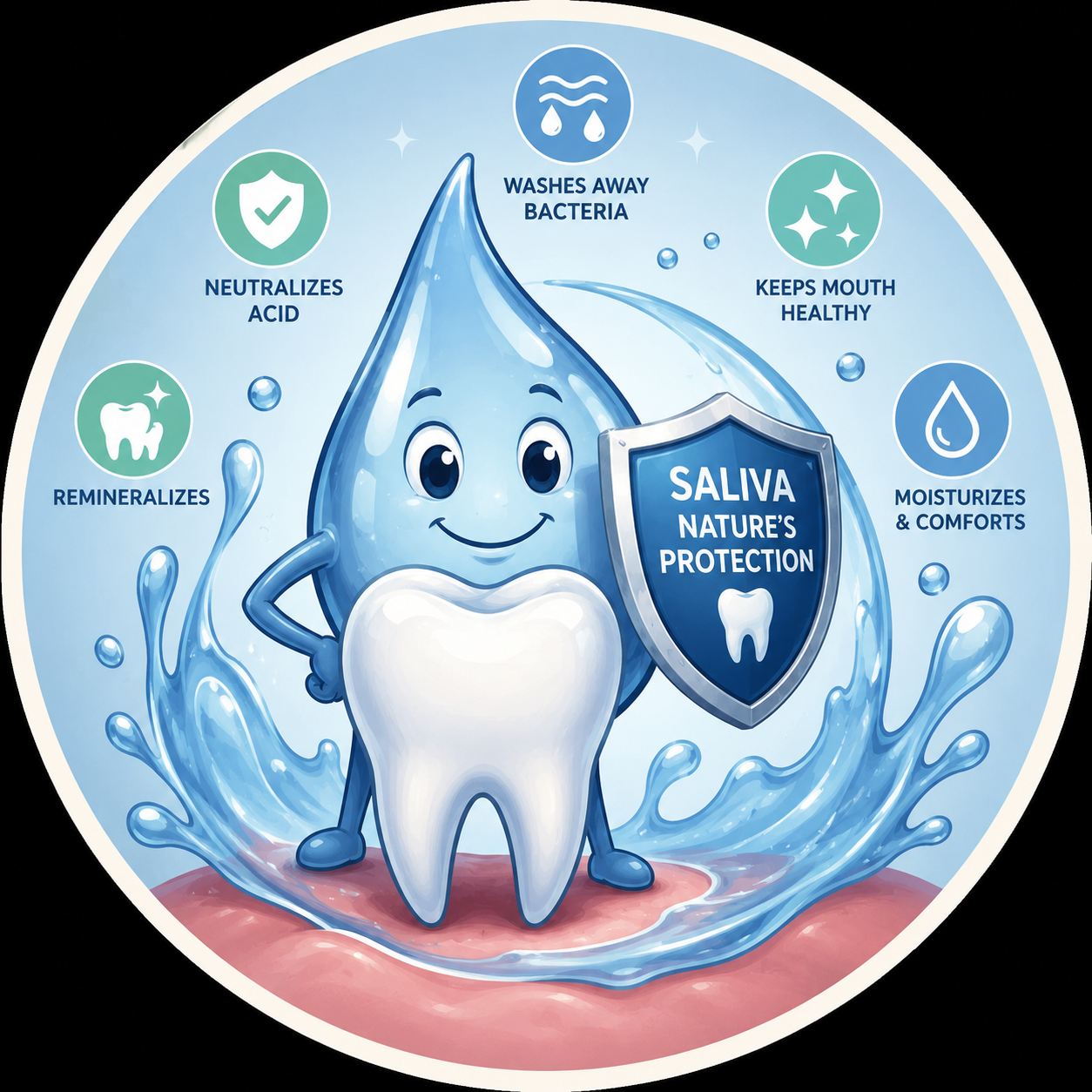
Saliva does much more than keep your mouth comfortable. It constantly washes away food particles and bacteria. It helps neutralize the acids produced after you eat. It delivers important minerals, such as calcium and phosphate, back to the surface of your teeth to help repair microscopic areas of early damage. It also lubricates the tissues of your mouth, making it easier to speak, chew, and swallow.
Think of saliva as your mouth's own cleaning crew, repair team, and security system all working around the clock. Most of us never notice it because it's always there, quietly doing its job.
Without enough saliva, the balance inside your mouth changes dramatically. Bacteria multiply more easily. Acids remain on the teeth longer. The enamel loses one of its greatest sources of protection, and the risk of decay rises quickly.
This is why patients with dry mouth often develop cavities in unusual places, especially around the gumline, between the teeth, and along the edges of existing fillings. Teeth that have remained healthy for decades can suddenly begin breaking down.
Unfortunately, the damage often happens quietly. By the time a cavity becomes painful, significant destruction may already have occurred.
Dry mouth is not simply an inconvenience. It is often a sign that something else deserves attention. Common causes include:
As dentists, we don't just look at the teeth—we also try to understand why the mouth has become dry in the first place.
The first step is recognizing the symptoms. Do you frequently wake up with a dry mouth? Need water to swallow food? Feel like your mouth is sticky? Struggle with bad breath despite brushing? These may all be signs that your saliva is not doing its job.
The good news is that there are many ways to help. Staying well hydrated, addressing mouth breathing, reviewing medications with your physician when appropriate, using saliva substitutes or stimulants, and choosing products designed for dry mouth can all make a meaningful difference.
One of the goals of Voyage to Vitality is to help you understand that oral health is about much more than fixing cavities. It is about creating the conditions that allow your mouth to stay healthy naturally. Saliva is one of those conditions.
When your mouth has the moisture it needs, your teeth have a remarkable ability to defend themselves. When that protection is lost, even the healthiest teeth become more vulnerable. So the next time you think about protecting your smile, remember that your toothbrush isn't working alone. One of your greatest allies has been quietly helping you all along.