

Fixing the damage is important. Understanding the cause can change everything.
Imagine discovering a water stain on your ceiling. You hire someone to repair the drywall, repaint the ceiling, and make everything look beautiful again. Problem solved, right? Not quite.
What happens if nobody fixes the leaking roof? Eventually, that water stain will return. Dentistry works the same way: when you develop a cavity; a filling repairs the damage. But what caused the cavity in the first place? More importantly, what has changed to prevent another from developing? Because fixing a tooth and creating a healthy mouth aren't necessarily the same. A filling does not make you healthy.
For generations, dentistry has focused heavily on finding cavities and repairing them. Find a hole. Remove the decay. Place a filling. While fillings are essential when a tooth needs restoration, they don't automatically change the conditions that allowed the cavity to develop.
Dental decay is a process, not simply a hole in a tooth.
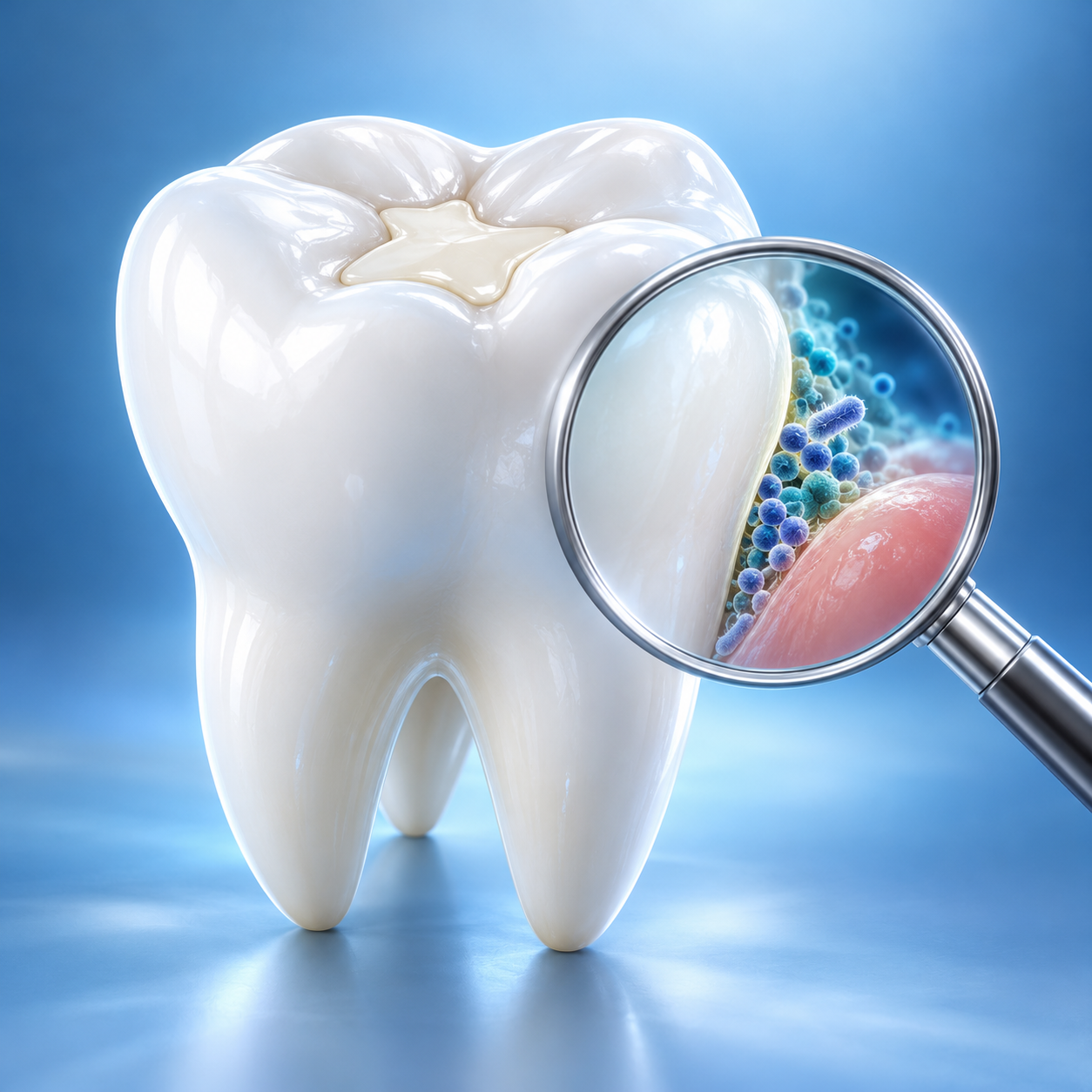
Your mouth contains hundreds of bacterial species. Some of these bacteria metabolize sugars and other fermentable carbohydrates, producing acids that can dissolve minerals from your enamel. Fortunately, your body has a remarkable natural defense system: saliva. Saliva neutralizes acids, washes away food debris, and provides minerals that help repair early enamel damage.
Throughout the day, your teeth constantly balance mineral loss, called demineralization, with mineral gain, called remineralization. When that balance shifts toward repeated mineral loss, cavities can develop. A filling replaces damaged tooth structure, but it doesn't necessarily restore that balance. If your mouth environment stays the same, the risk of new cavities remains.
Here's something many patients don't realize. Dental restorations are not permanent. A well-placed filling can last many years, but restorations will eventually need repair or replacement.
Sometimes a filling develops a defect. Sometimes a portion of the tooth fractures. In other cases, new decay develops around the restoration. When a restoration needs to be replaced, the dentist may need to remove additional tooth structure. Over a lifetime, this can create a frustrating cycle:
Not every tooth follows this path, and a filling that functions well doesn't need replacement simply because it is old. But the restoration cycle illustrates an important principle. The more natural tooth structure we can preserve, the more options we may have in the future. This is why we are so passionate about minimally invasive dentistry and techniques like BioClear. We want to repair teeth in ways that preserve healthy structure while also addressing the conditions that caused the damage.
It means you deserve more than being told you have another cavity. You deserve to understand why it developed. You deserve to know whether you can reduce your risk of future problems. And you deserve to help choose the approach that makes the most sense for your health, your goals, and your circumstances.
Not every cavity can be prevented, and not every damaged tooth can be managed without a restoration. But when we understand the factors that contribute to dental disease, we have a better chance of making meaningful changes. We can move from repeatedly repairing damage toward creating conditions that support long-term health.
For many years, we measured dentistry's success by the quality of the restoration. How beautiful was the filling? How perfectly did the crown fit? How naturally did the restoration blend with the surrounding teeth?
Those things still matter. Great restorative dentistry requires exceptional attention to detail. But perhaps we should also measure success by something else. How many new cavities did we help prevent? How much healthy tooth structure did we preserve? Did we identify why a patient's teeth kept breaking down? Did we help someone better understand their own health?
These questions excite us about the future of dentistry. Dentistry should not simply repair the consequences of disease; it should also help patients understand and influence the factors that contribute to it. A filling repairs a tooth. Understanding why that tooth needed a filling may help protect an entire smile. That's where lasting change can begin.