

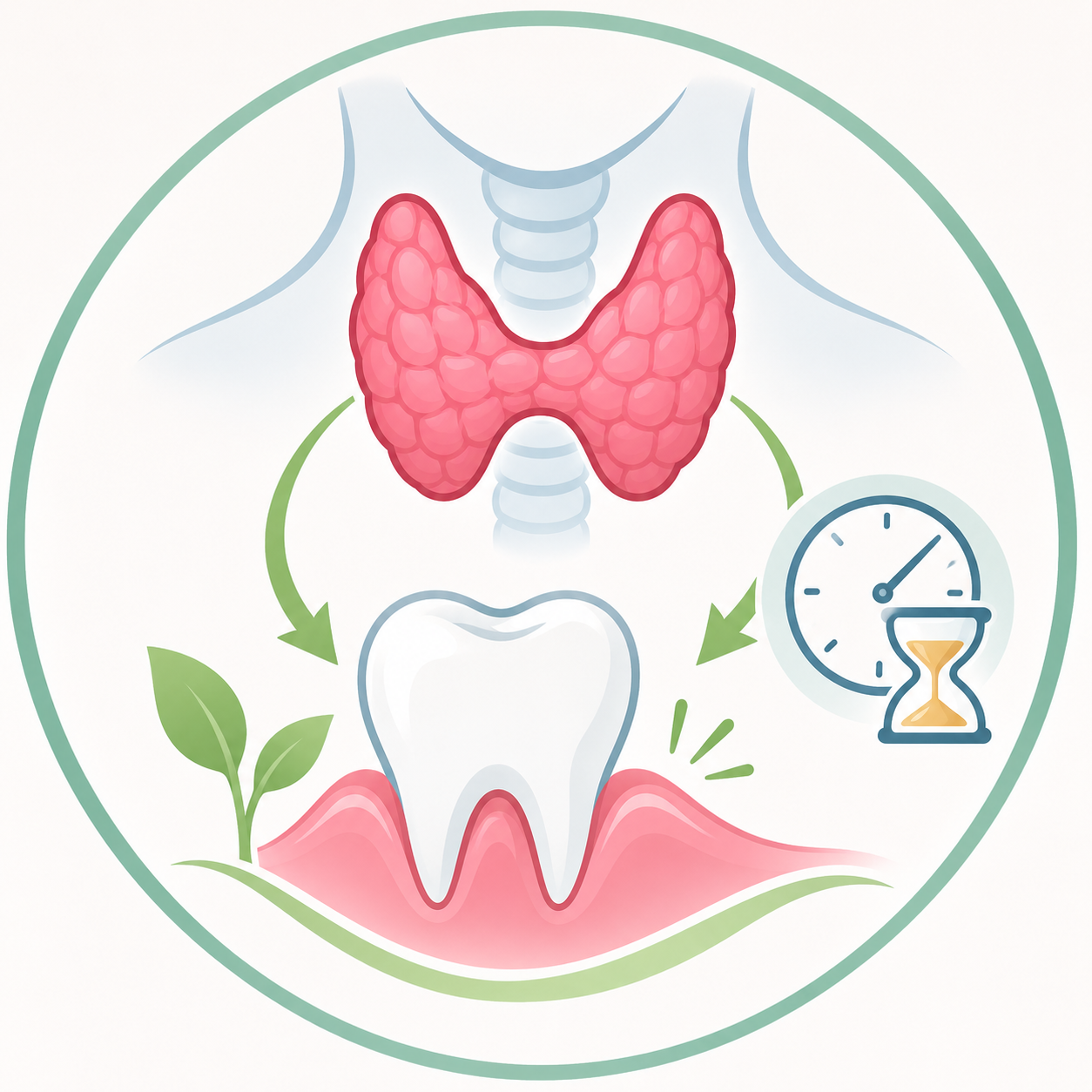
Have you ever wondered why some people seem to bounce back from an injury while others take their sweet time healing? One person has a tooth extracted and seems ready to conquer the world the next morning. Another takes longer to recover. While there are many reasons healing can vary, one surprising contributor may be a small, butterfly-shaped gland quietly minding its own business in your neck.
Meet your thyroid. Small gland. Enormous job description. Apparently, nobody told it about work-life balance.
Your thyroid produces hormones that help regulate your metabolism, essentially controlling how your body uses energy. But metabolism isn’t just about how quickly you burn off last night’s dessert. It influences nearly every cell in your body, including those responsible for maintaining and repairing tissues.
Think of your body as a construction company. Every day, crews are busy repairing damage, replacing worn-out materials, and maintaining the infrastructure. Your thyroid helps regulate the pace of that work. When thyroid hormone levels are normal, the crews have the hormonal signals they need to do their jobs. But when thyroid hormone levels are too low, as in hypothyroidism, the entire operation can slow down. Apparently, the construction crew has decided to take an extended coffee break.
And that’s where your mouth comes into the picture. Healing after dental treatment is a remarkable biological process. Following an extraction, periodontal procedure, or other surgery, your body must control inflammation, form new blood vessels, produce collagen, and rebuild tissues. These processes require energy, proper circulation, and coordinated cellular activity. Thyroid hormones help regulate several of these functions.
When hypothyroidism is untreated or poorly controlled, tissue repair may be impaired. Research suggests that insufficient thyroid hormone can interfere with new blood vessel formation and other important steps in wound healing. Although much of this research involves skin and experimental models, it helps explain why thyroid health deserves consideration when evaluating a patient’s ability to recover.
But the connection doesn’t stop with healing. Thyroid hormones also influence bone metabolism, including the delicate balance between bone formation and breakdown. That’s particularly interesting in dentistry because your teeth are supported by bone and periodontal tissues that are constantly being maintained and remodeled. Researchers have found associations between thyroid dysfunction, particularly hypothyroidism, and poorer periodontal health. We are still learning exactly how these conditions interact, and an association does not necessarily mean one causes the other. Nevertheless, it’s another reminder that your mouth does not operate independently from the rest of your body.
Now, before everyone taking thyroid medication starts worrying about their next dental appointment, here’s the important distinction: Having a thyroid condition does not automatically mean you will heal poorly. When thyroid disease is appropriately managed, most patients can undergo routine dental treatment and heal normally.
Successful dentistry isn’t simply about what we do to your teeth - it’s also about how your body responds afterward. Your thyroid may be small, but it has an impressive amount of influence. And when it comes to healing, we would prefer the construction crew show up on time.