

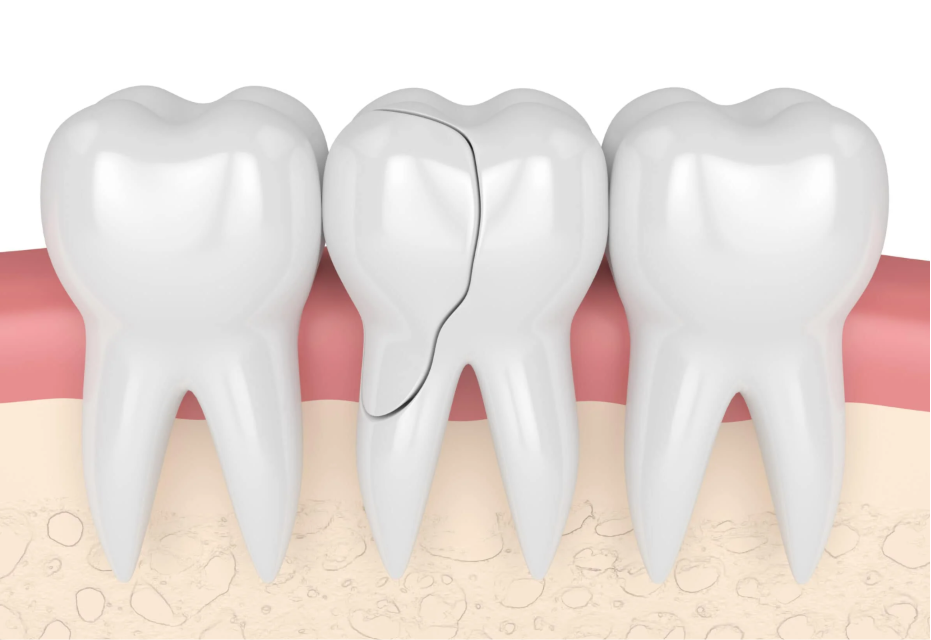
One of the most surprising phone calls we receive is, “I was just eating dinner, and my tooth cracked.”
The story is almost always the same. Maybe it happened while eating a banana, biting into a sandwich, or chewing a piece of bread. The natural assumption is that the food caused the tooth to break. In reality, the food was often just the final straw.
Teeth are remarkably strong. In fact, the outer layer of your tooth, called enamel, is the hardest substance in the human body. Healthy teeth are designed to withstand hundreds of thousands of chewing cycles throughout your lifetime. They do not simply reach an expiration date.
So why do they crack? The answer usually lies in a combination of two important factors: the health of the tooth itself and the forces placed upon it.
Every filling, cavity, or previous dental procedure changes the structure of a tooth. Think of a healthy tooth like a solid oak tree. Over time, each restoration is a little like trimming away part of that tree. Even when beautifully restored, the tooth may not be quite as strong as it once was.
This does not mean fillings are bad. Quite the opposite—they preserve teeth and allow us to keep them functioning for many years. However, every restoration becomes part of that tooth’s story and influences how it responds to chewing forces over time. Large fillings, previous root canals, and years of microscopic wear can all reduce a tooth’s ability to absorb stress.
Your teeth were designed to function as a team. When your bite is healthy and balanced, the force of chewing is shared among all of your teeth. Each tooth does its part, allowing the entire chewing system to work efficiently.
Problems develop when that balance is lost. If one tooth hits harder than the others, or if your bite has changed over time because of wear, shifting teeth, clenching, grinding, or missing teeth, that single tooth begins absorbing more force than it was designed to handle. Most people have no idea this is happening because it rarely causes pain at first.
Imagine carrying a heavy grocery bag with all the weight in one finger instead of spreading it across your whole hand. Your finger may tolerate it for a while, but eventually it becomes sore and fatigued. The weight itself isn't necessarily the problem—it is how the load is being distributed.
The same thing happens with your teeth. Over months or even years, excessive force can create tiny microscopic cracks within a tooth. These cracks slowly grow until one day you bite into something as ordinary as a sandwich or a piece of toast, and the tooth suddenly fractures. The sandwich didn't cause the crack. It simply exposed a problem that had been developing for a long time.
When patients hear that a tooth has cracked, they often ask, “Could this have been prevented?” Sometimes the answer is yes.
Maintaining healthy teeth through regular preventive care, treating cavities before they become large, and protecting weakened teeth with appropriate restorations all help preserve your healthy foundation. Equally important is ensuring your chewing system functions as nature intended. A balanced bite allows the teeth to work together as a team instead of forcing one tooth to do the heavy lifting.
My goal is never simply to repair a broken tooth. It is to understand why it broke in the first place. If we only fix the crack but ignore the underlying forces that caused it, another tooth may eventually become the next victim.
A cracked tooth is rarely just bad luck. More often than not, it is your body giving us valuable information. By caring for both the health of your teeth and the health of your chewing system, we can often prevent tomorrow’s dental emergency before it ever happens.