

A brighter smile is one of the most common goals patients share—and for good reason. It feels fresh, confident, and healthy. But here’s the part that often gets overlooked: whitening should never come at the expense of your tooth structure. A truly healthy approach doesn’t just make teeth whiter—it keeps them strong, resilient, and supported for the long term.
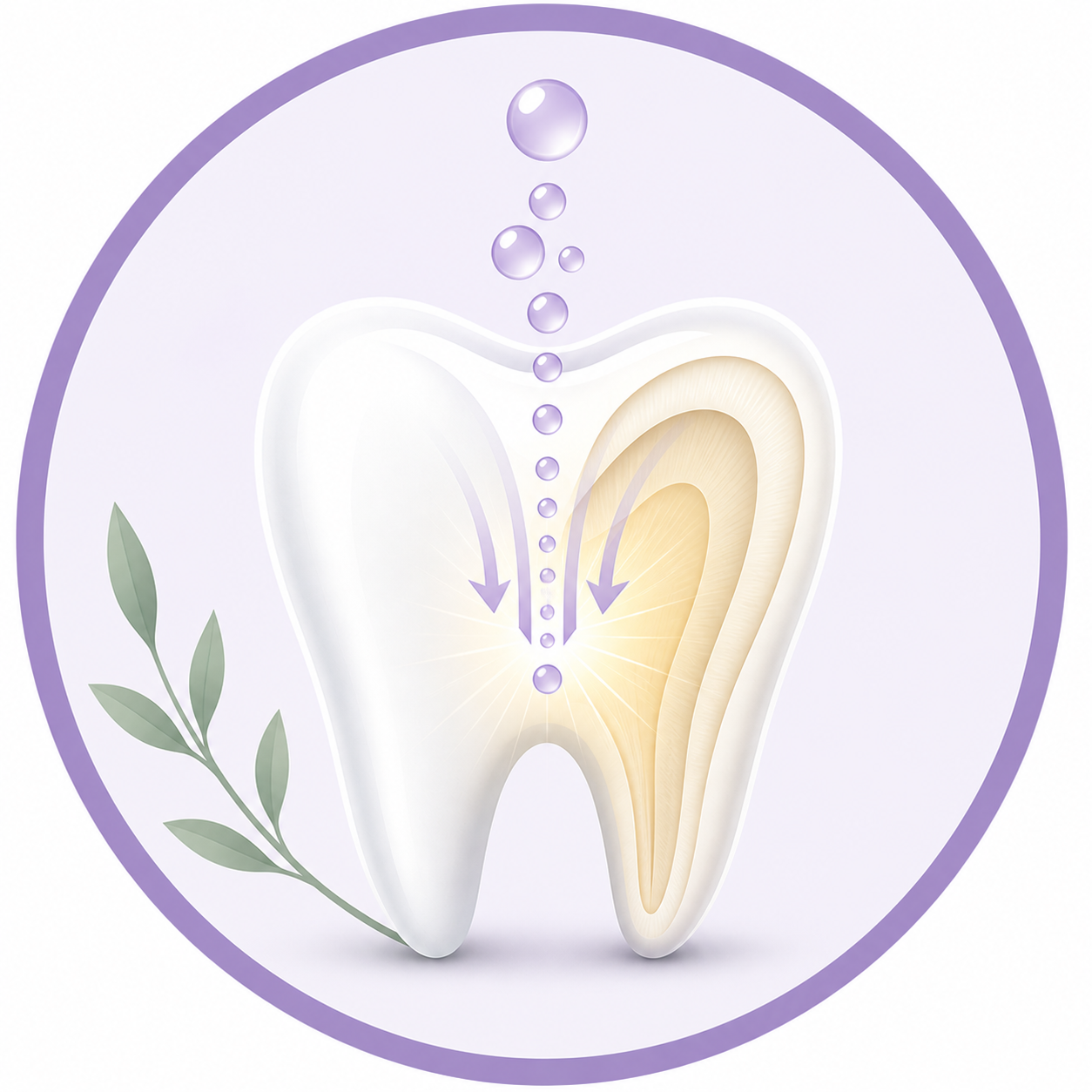
Most whitening systems use a form of hydrogen peroxide. This peroxide travels through the outer layer of the tooth—the enamel—and reaches the dentin, which is the center of the tooth. The dentin is naturally darker and more yellow in color, and it plays a major role in how your teeth appear overall. Once the peroxide reaches this layer, it breaks apart stain molecules, lightening the color from within rather than just on the surface.
It’s an effective process—but it’s also active chemistry happening inside a living structure. Enamel may be the hardest substance in the body, but it is still semi-permeable and responsive to its environment. When whitening is done too aggressively, too frequently, or without proper support, it can lead to dehydration, increased sensitivity, and temporary changes in the enamel surface.
This is where the concept of a healthy foundation becomes essential. Before focusing on color, we have to ask: are the teeth and surrounding tissues ready?
Healthy enamel depends on minerals—primarily calcium and phosphate—to stay strong. It also relies on saliva, which acts as the body’s natural buffering and repair system. In simple terms, whitening works best when the environment is already balanced.
Whitening should follow a clear understanding of your oral health. If there is active gum inflammation, untreated decay, or exposed root surfaces, those should be addressed first. Whitening over an unstable foundation is like painting over a cracked wall—it may look good briefly, but it won’t last.
Remineralizing agents—such as fluoride, hydroxyapatite, or calcium-based pastes—can help reinforce the tooth structure before, during, and after whitening. Think of this as giving your teeth the nutrients they need to stay strong while undergoing change.
Not all whitening methods are created equal, and stronger is not always better. Professional guidance allows for controlled concentrations, proper application, and adjustments based on how your teeth respond. The goal is steady, safe improvement—not a rushed result that leads to sensitivity or damage.
Sensitivity is not something to push through—it is information. When we listen and adjust—whether by spacing out treatments, lowering concentration, or increasing remineralization—we create a result that is both beautiful and sustainable.
A white smile is powerful. But a strong, healthy smile is transformative. When whitening is done with intention—supporting the biology rather than overriding it—you don’t just change how your teeth look. You protect what makes them last.