

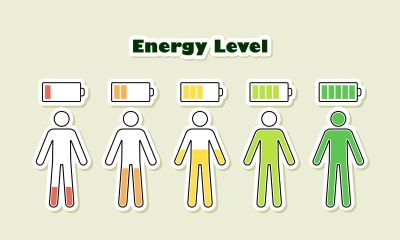
This may sound like a hippie article at first glance—but rest assured, no crystals are involved.
From a scientific perspective, energy is the capacity of cells and systems to perform work. At the cellular level, energy is produced in the form of adenosine triphosphate (ATP), generated primarily by the mitochondria. This process requires adequate oxygen, sufficient nutrients, and efficient signaling between systems.
Clinically, energy regulation can be evaluated in several measurable ways:
When these markers are optimized, the body operates efficiently. When they are not, the body compensates—and compensation is expensive.
A healthy system does not require constant stimulation to function. Proper energy flow means information moves smoothly through the nervous system, muscles respond appropriately, and recovery occurs without interruption. When this flow is disrupted, the body reallocates energy toward protection rather than performance.
This often shows up as persistent fatigue despite adequate sleep, brain fog or delayed mental clarity, feeling “wired but tired,” or energy crashes instead of steady endurance.
These are not vague complaints. They are physiological signals that energy is being diverted from restoration to compensation.
The nervous system determines how energy is distributed. When it perceives instability—mechanical, chemical, or emotional—it shifts the body into a protective state. Muscles tighten, breathing patterns change, digestion slows, and inflammatory pathways increase.
While this response is adaptive in the short term, it becomes draining when sustained. Over time, the body adapts to this state. People continue to function, but they do not feel well. The system is running—but inefficiently.
In most cases, low energy does not result from a single system failing. It results from friction at the points where systems must work together. Energy loss is rarely about capacity; it is about coordination.
The body operates as an integrated network. The nervous system directs activity, the musculoskeletal system provides structure and movement, the respiratory system supplies oxygen, and the metabolic system converts fuel into usable energy. When these systems communicate efficiently, energy flows with minimal effort. When communication breaks down, the body compensates.
These inefficiencies most often occur at interfaces—where breathing patterns influence muscle tone, where structural imbalance alters neurological input, where inadequate recovery disrupts metabolic regulation. Each system may appear functional on its own, yet the overall system operates at a higher energetic cost. This explains why testing can appear “normal” while a person feels persistently depleted.
To maintain stability in the face of poor coordination, the body recruits additional muscle activity, increases nervous system vigilance, and limits recovery. This is not failure. It is adaptation. However, adaptation without resolution steadily drains available energy.
Understanding energy loss at the level of system interaction explains why stimulants, supplements, or motivation rarely solve fatigue. True energy is restored not by forcing output, but by reducing friction between systems.
Poor energy flow rarely announces itself dramatically. It develops gradually through small, often reasonable adaptations. The body is remarkably intelligent and will always prioritize survival over efficiency.
When systems are under strain, the body compensates quietly at first. Energy is reallocated to maintain basic function. Muscles tighten to create stability. The nervous system remains on higher alert. Breathing becomes shallower. Recovery is delayed. None of this feels alarming in isolation. In fact, it often feels familiar. This is how the body learns to “get through the day.”
Because the decline is slow, expectations adjust. What once felt abnormal becomes typical. Waking tired feels routine. Needing caffeine feels acceptable. Brain fog is blamed on stress or age. Sleep disruption is dismissed as part of a busy life. These changes are subtle enough to be rarely questioned, yet persistent enough to reshape daily functioning.
Modern culture reinforces this normalization. Fatigue is framed as a productivity issue rather than a physiological one. People are encouraged to push through or optimize schedules instead of asking why the system is struggling to sustain energy.
Over time, the body remains in a low-grade protective state—functional, but inefficient.
Eventually, compensation becomes the baseline. The nervous system adapts to constant demand, and the body loses access to truly restorative states. At this point, people may say they are “fine,” even though their energy, focus, and resilience are diminished.
The system is running—but at a higher cost.
This is why poor energy flow is often mistaken for normal aging, personality, or stress tolerance. In reality, it reflects unresolved strain. Normalized fatigue is not the absence of health; it is the presence of adaptation without resolution.
Recognizing this shift is powerful. When energy is viewed as data rather than a personal flaw, it becomes possible to identify root causes, reduce unnecessary demand, and restore efficient energy flow.
The goal is not to push harder, but to allow the body to stop compensating—and start functioning as designed.
Proper energy flow is not about having more energy—it is about using energy well. In a healthy system, energy is produced efficiently at the cellular level, distributed appropriately through the nervous system, and conserved through balanced structure and recovery. The healthy self emerges when the body no longer needs to divert energy toward constant compensation.
When systems are aligned, the nervous system can shift from protection to regulation. Muscles maintain tone without chronic tension. Breathing supports oxygen delivery rather than limiting it. Digestion, immune function, and tissue repair occur without competing for resources.
Energy is no longer spent managing instability; it becomes available for clarity, resilience, and healing.
From a physiological standpoint, proper energy flow reflects coordination. Cellular energy production depends on oxygen, nutrients, and effective signaling. Neural pathways must transmit information without excessive noise. Musculoskeletal balance reduces unnecessary muscle firing.
When any component is strained, energy demand increases. When systems work together, demand decreases. This is why people often feel better—not just less tired—when underlying systems are supported.
Focus improves. Mood stabilizes. Sleep becomes restorative rather than superficial. Physical activity feels sustainable rather than draining.
These changes are not psychological; they result from reduced energetic cost.
The healthy self is not defined by constant output or peak performance. It is defined by adaptability. A regulated system can respond to stress and recover. It can mobilize energy when needed and conserve it when not. This flexibility is a core marker of health.
Restoring proper energy flow does not require forcing the body into change. It requires removing barriers to efficient function. When strain is reduced—mechanical, neurological, or metabolic—the body naturally reallocates energy toward growth, repair, and long-term stability.
Energy becomes a practical health metric. When energy is steady and reliable, the system works with itself rather than against itself.
The healthy self does not need to be created. It emerges when the body is allowed to function without unnecessary resistance.
So yes, the “crystal people” may have been onto something all along. Not because quartz has magical powers, but because they were paying attention to something science can now measure and explain.
Energy, stripped of mysticism, is simply how efficiently the body produces, distributes, and conserves its resources.
Modern physiology, neuroscience, and systems biology confirm what intuition has long hinted at: when flow is restricted, function suffers. When systems are supported, and communication improves, the body works better—and feels better. No incense required.
The problem was never the idea of energy. It was the lack of language and tools to explain it in measurable terms. Today, we have both. What once sounded abstract is now data.
So if the concept of energy once made you roll your eyes, consider this permission to reconsider—not as a belief system, but as a biological reality. When energy flows efficiently, health becomes sustainable. And when health is sustainable, the healthy self is not something you chase—it is something you recognize.
Turns out, science didn’t disprove the concept of energy. It just finally caught up.