

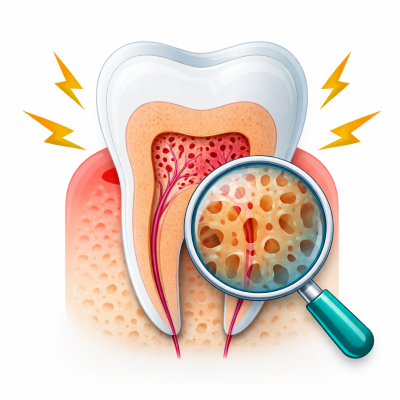
Teeth are often described as hard, solid, and unchanging. From the outside, that seems true. But beneath the smooth enamel surface lies a living, responsive structure that behaves far less like stone—and far more like microscopic coral.
Understanding dental tubules helps explain why teeth can become sensitive, reactive, or uncomfortable even when they appear “healthy” on X-rays and exams. Sensitivity is not randomness. It is communication.
Teeth are made of three layers. Dental tubules are microscopic, fluid-filled channels located within dentin, the layer of tooth structure beneath enamel.
Each tooth contains tens of thousands of these tubules per square millimeter, extending from the inner nerve tissue of the tooth outward toward the surface.
Dentin is not solid. It is porous, dynamic, and alive. Structurally, it closely resembles microscopic coral—a dense network of tiny passageways designed for communication and shock absorption. These tubules contain fluid and nerve extensions that connect directly to the tooth’s nerve system.
Key Concept: Dentin is sensitive because it is meant to be. It acts as a biological sensor for the tooth.
While the name sounds technical, the process is simple. Dental tubules function through what is known as the hydrodynamic mechanism:
Cold causes rapid fluid shifts. Air, sweets, acids, and biting forces can do the same. The sensation is often sharp and brief because the tooth is doing exactly what it was designed to do: alert you to a change in its environment.
Tooth sensitivity is an early warning sign that the tooth needs attention—not suppression. When you feel that sharp "zing," it often indicates one of the following:
A thoughtful dental evaluation looks at more than just one tooth; it considers bite forces, gum health, and chemical exposure. When the cause is identified and addressed, sensitivity often resolves—not because it was numbed, but because the tooth no longer needs to signal for help.
The empowering part is that sensitivity often appears long before serious damage occurs. It is information, not a conclusion. Addressing it early allows for:
A healthy foundation is built by listening to signals, respecting the biology of the tooth, and responding with intention. When sensitivity is viewed as a guide rather than a nuisance, it helps preserve long-term oral health and stability.
Your teeth aren't just tools; they are living parts of your sensory system.